
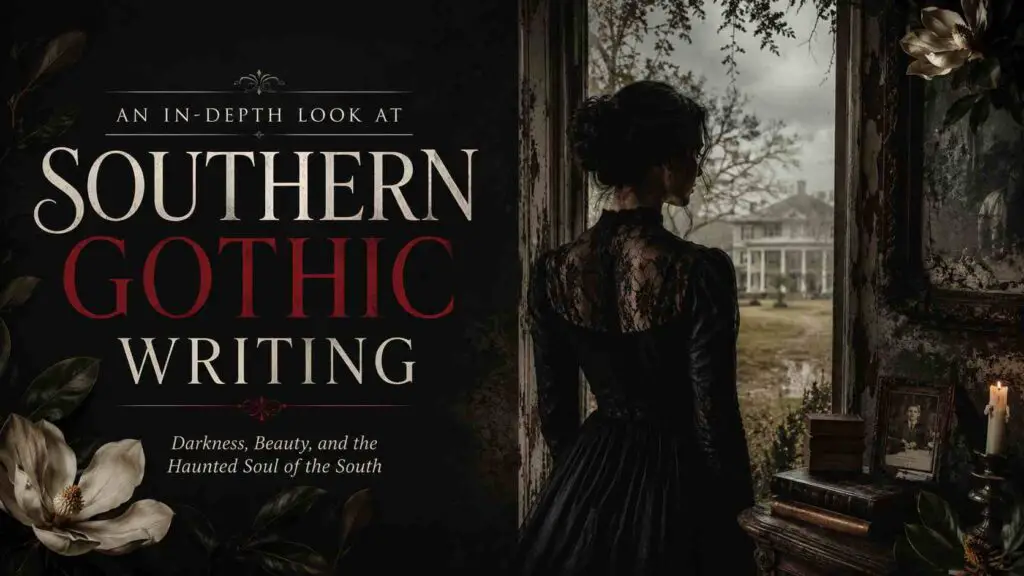
Southern Gothic writing is a distinctive literary genre that combines the dark atmosphere of Gothic fiction with the unique history, culture, and social realities of the American South. Rather than focusing solely on haunted castles or supernatural creatures, Southern Gothic stories often explore human flaws, social tensions, and the lingering effects of the past. The genre is known for its grotesque characters, decaying settings, moral complexity, and unsettling events that reveal deeper truths about society. Through powerful storytelling, Southern Gothic writers examine issues such as race, poverty, religion, and identity, making the genre one of the most influential traditions in American literature.
What Is Southern Gothic Writing?
Southern Gothic writing is a literary genre that emerged in the American South and blends elements of traditional Gothic fiction with regional themes and concerns. While classic Gothic literature often relies on mysterious castles, supernatural forces, and exaggerated horror, Southern Gothic focuses more on psychological tension, social decay, and the darker aspects of Southern life.
The genre developed as writers sought to explore the contradictions and complexities of Southern society. Many Southern Gothic works examine the lingering effects of slavery, economic hardship, racial inequality, religious fanaticism, and cultural decline. Rather than presenting an idealized vision of the South, these stories reveal uncomfortable truths hidden beneath the surface.
Darkness, decay, and grotesque imagery are frequently used to expose social problems and moral failures. As a result, Southern Gothic writing often feels both disturbing and thought-provoking. Readers are drawn into strange worlds that reflect real historical and cultural struggles while challenging assumptions about humanity and society.
The History of Southern Gothic Writing
Early Influences
Southern Gothic writing owes much of its foundation to the Gothic literary tradition that emerged in Europe during the eighteenth century. Early Gothic novels featured gloomy settings, mysterious events, supernatural occurrences, and characters haunted by the past. These elements later influenced American writers who adapted them to their own cultural environment.
The history of the American South provided fertile ground for this adaptation. The region’s legacy of slavery, social hierarchy, religious influence, and economic instability created a backdrop filled with tension and contradiction. Writers recognized that the South’s troubled history contained many of the same themes found in Gothic fiction, including guilt, fear, decline, and hidden secrets.
The Rise of the Genre
Southern Gothic gained prominence during the late nineteenth and early twentieth centuries. Following the Civil War, the South experienced dramatic social and economic changes that reshaped communities and identities. Writers began exploring these transformations through stories that highlighted the region’s struggles and uncertainties.
During this period, authors moved away from romantic portrayals of Southern life and focused instead on its darker realities. They depicted crumbling plantations, broken families, isolated towns, and individuals grappling with moral and social conflicts. This shift helped establish Southern Gothic as a distinct literary genre.
Modern Developments
The influence of Southern Gothic continues into the modern era. Contemporary writers often revisit traditional themes while addressing new issues such as changing social values, urbanization, and cultural identity. Although the settings and characters may differ from earlier works, the genre’s focus on darkness, complexity, and social criticism remains intact.
Today, Southern Gothic elements appear not only in literature but also in films, television shows, and popular culture. The genre’s ability to confront uncomfortable truths ensures its continued relevance to modern audiences.
Key Characteristics of Southern Gothic Writing
Grotesque Characters
One of the defining features of Southern Gothic writing is the presence of grotesque characters. These individuals often possess unusual physical traits, psychological disorders, moral failings, or eccentric behaviors. They may appear strange, disturbing, or even frightening.
However, grotesque characters are not included merely for shock value. They often serve as symbols of larger social issues or reveal hidden truths about the communities around them. Their flaws and struggles help readers examine the complexities of human nature.
Decaying Settings
Southern Gothic stories frequently take place in environments marked by decline and deterioration. Abandoned houses, collapsing plantations, neglected churches, and isolated rural communities are common settings.
These decaying landscapes symbolize the erosion of old traditions, social systems, and cultural ideals. They also reflect the burden of history and the inability of certain individuals or communities to move beyond the past.
Social Issues and Cultural Criticism
Unlike many forms of horror fiction, Southern Gothic writing often serves as a vehicle for social commentary. Authors use their stories to examine racism, poverty, class conflict, injustice, and religious extremism.
By presenting these issues through unsettling narratives and memorable characters, writers encourage readers to confront difficult realities. The genre’s dark tone allows it to expose problems that might otherwise remain hidden or ignored.
Violence and Disturbing Events
Violence frequently appears in Southern Gothic literature. Murders, accidents, abuse, and shocking confrontations often play important roles in the narrative. These events create tension while highlighting deeper moral and social conflicts.
Rather than existing solely to entertain, disturbing incidents often reveal the consequences of prejudice, greed, obsession, or corruption. The resulting discomfort encourages readers to think critically about the forces shaping the characters’ lives.
Supernatural and Uncanny Elements
Although Southern Gothic writing tends to emphasize realism more than traditional Gothic fiction, supernatural and uncanny elements still appear in many works. Ghost stories, local legends, mysterious events, and unexplained occurrences contribute to the genre’s atmosphere.
In some cases, these elements are genuinely supernatural. In others, they may represent psychological fears or cultural anxieties. This ambiguity creates a sense of uncertainty that enhances the overall impact of the story.
Common Themes in Southern Gothic Writing
The Burden of the Past
Many Southern Gothic stories explore how historical events continue to shape individuals and communities. Characters often struggle with inherited guilt, family secrets, or unresolved conflicts that originated generations earlier. This theme reflects the South’s deep historical roots, particularly its legacy of slavery, war, and social division. The past is rarely distant in these narratives; instead, it lingers in the present, influencing decisions, relationships, and identities. Characters may feel trapped by their ancestry or unable to escape the consequences of actions taken long before they were born, creating a sense of inevitability and emotional weight.
Decline and Decay
Physical and social deterioration are recurring themes throughout the genre. Decaying buildings, fading traditions, and declining communities symbolize broader cultural and moral decline. Old mansions may crumble alongside the families that once thrived within them, representing the collapse of former social structures and values. This decay often mirrors the internal struggles of characters, suggesting that both individuals and societies are subject to erosion over time. The imagery of rot and neglect reinforces the idea that the past cannot be preserved indefinitely and that attempts to cling to it may lead to stagnation or ruin.
Sin and Redemption
Questions of morality frequently drive Southern Gothic narratives. Characters may seek redemption for past mistakes, while others descend further into corruption and self-destruction. Religious imagery and themes often play a significant role, reflecting the strong influence of faith in Southern culture. However, redemption is rarely straightforward or guaranteed. Characters may confront their sins in dramatic or violent ways, and their attempts at atonement can be complicated by pride, denial, or societal pressures. This theme highlights the tension between moral failure and the possibility of forgiveness, often leaving readers to question whether true redemption is achievable.
Isolation and Alienation
Many protagonists feel disconnected from society. Their loneliness often intensifies personal struggles and contributes to the emotional atmosphere of the story. Isolation can be physical, such as living in remote or decaying environments, or psychological, stemming from a sense of not belonging or being misunderstood. Characters may be marginalized due to their beliefs, behaviors, or identities, which deepens their alienation. This separation from others often leads to introspection, obsession, or distorted perceptions of reality, making isolation a powerful force that shapes both character development and narrative tension.
Moral Ambiguity
Southern Gothic writing rarely presents simple distinctions between good and evil. Characters are often complex and flawed, forcing readers to confront difficult ethical questions. Individuals who appear virtuous may harbor dark secrets, while those who seem villainous may evoke sympathy or understanding. This ambiguity challenges traditional moral frameworks and encourages readers to consider the motivations and circumstances behind each character’s actions. By blurring the lines between right and wrong, Southern Gothic stories reflect the complexities of human nature and the difficulty of making clear moral judgments.
Tradition Versus Change
The conflict between preserving traditional values and embracing change is central to many Southern Gothic works. This tension reflects the South’s ongoing struggle to reconcile its past with its future. Characters may cling to outdated customs or social hierarchies, resisting progress even when it is necessary for survival or growth. Others may push for change, challenging established norms and facing resistance from their communities. This clash often creates conflict within families and societies, highlighting the difficulties of transformation. The theme underscores the idea that while tradition can provide identity and continuity, it can also hinder progress and perpetuate injustice if left unexamined.
Famous Southern Gothic Writers
William Faulkner
William Faulkner is widely regarded as one of the most important Southern Gothic writers. His novels explore themes of family decline, racial tension, historical guilt, and social transformation. Through his fictional Yoknapatawpha County, Faulkner created a richly detailed portrait of the South and its complexities.
Flannery O’Connor
Flannery O’Connor is known for her sharp social observations, dark humor, and unforgettable characters. Her stories often combine violence, religious themes, and moral revelation. O’Connor’s unique approach helped define the modern Southern Gothic tradition.
Carson McCullers
Carson McCullers focused on loneliness, isolation, and the search for human connection. Her characters frequently struggle with emotional and social alienation, making her work an important contribution to the genre.
Tennessee Williams
Although best known as a playwright, Tennessee Williams incorporated many Southern Gothic elements into his dramas. His works feature troubled characters, decaying social structures, and themes of desire, repression, and decline.
Other Notable Authors
Several other writers have contributed significantly to Southern Gothic literature. Truman Capote explored mystery and psychological tension, Cormac McCarthy examined violence and moral darkness, and Anne Rice brought Southern Gothic themes into modern supernatural fiction.
Notable Examples of Southern Gothic Writing
Absalom, Absalom!
This novel by William Faulkner examines family obsession, racial conflict, and the destructive power of the past. Its complex narrative structure, shifting perspectives, and layered storytelling create a sense of mystery and fragmentation that mirrors the characters’ struggles. The novel’s dark themes and exploration of Southern history make it a landmark Southern Gothic work.
A Good Man Is Hard to Find
Flannery O’Connor’s famous short story combines dark humor, violence, and spiritual themes. Through the encounter between a seemingly ordinary family and a dangerous criminal, O’Connor explores morality, grace, and human weakness. The story demonstrates many of the genre’s defining characteristics, including shocking violence and moments of unsettling revelation.
The Heart Is a Lonely Hunter
Carson McCullers explores loneliness, misunderstanding, and social isolation through a cast of memorable characters living in a Southern town. Each character struggles to find connection and meaning, often projecting their desires onto others. The novel’s emotional depth and focus on alienation highlight key Southern Gothic themes.
Wise Blood
This novel by Flannery O’Connor examines faith, identity, and moral conflict through a deeply flawed protagonist whose journey reflects many Southern Gothic concerns. The story delves into religious obsession, existential doubt, and the search for meaning in a morally complex world. Its dark tone and symbolic elements reinforce its place within the genre.
Other Voices, Other Rooms
Truman Capote’s debut novel features mystery, eccentric characters, and psychological complexity, making it a notable example of Southern Gothic fiction. Set in a decaying Southern mansion, the story follows a young boy’s search for identity and belonging. The novel’s eerie atmosphere and exploration of personal transformation contribute to its lasting impact.
Southern Gothic Writing Versus Gothic Writing
Similarities
Southern Gothic writing shares many traits with traditional Gothic literature. Both genres use dark atmospheres, mystery, fear, psychological tension, and themes involving hidden secrets and human weakness.
Both forms also explore the darker side of human experience and often create feelings of unease or uncertainty in readers. They frequently rely on suspenseful storytelling, symbolic imagery, and emotionally intense situations to draw readers into unsettling worlds. In both genres, characters are often haunted—either by literal ghosts or by guilt, trauma, and unresolved past events.
Additionally, both Southern Gothic and traditional Gothic literature use setting as a powerful narrative tool. Whether it is a crumbling European castle or a decaying Southern plantation, the environment reflects the inner turmoil of the characters and reinforces the themes of decline, corruption, and fear. Both genres also blur the line between reality and the supernatural, leaving readers questioning what is real and what may be imagined.
Differences
The primary difference lies in setting and focus. Traditional Gothic fiction often takes place in castles, monasteries, or remote European landscapes. Southern Gothic stories are rooted in the American South and draw heavily from its history and culture.
Southern Gothic writing also places greater emphasis on social criticism. Rather than relying primarily on supernatural horror, it uses realistic situations and flawed characters to examine real-world issues such as racism, poverty, and social inequality. While traditional Gothic literature often centers on external threats like ghosts, curses, or villains, Southern Gothic tends to focus more on internal conflicts and societal problems.
Another key difference is the role of the supernatural. In classic Gothic works, supernatural elements are often central to the plot and may be presented as real forces. In Southern Gothic writing, supernatural elements are sometimes ambiguous or symbolic, representing psychological distress or cultural fears rather than literal occurrences.
Characterization also differs between the two genres. Traditional Gothic stories often feature archetypal figures such as innocent heroines, tyrannical villains, or mysterious strangers. In contrast, Southern Gothic characters are typically more grounded and complex, often portrayed as deeply flawed individuals shaped by their environment and history.
Finally, tone and purpose distinguish the genres. Traditional Gothic literature is primarily concerned with evoking fear and suspense through dramatic and often exaggerated scenarios. Southern Gothic, while still unsettling, aims to provoke reflection and critique society by exposing uncomfortable truths about human behavior and cultural systems.
Conclusion
Southern Gothic writing is a powerful literary genre that combines Gothic elements with the distinctive history and culture of the American South. Through grotesque characters, decaying settings, disturbing events, and complex themes, these stories explore the darker aspects of society and human nature.
The genre continues to captivate readers because it confronts difficult truths while offering rich psychological and cultural insight. Whether examining the burden of history, the struggle between tradition and change, or the search for redemption, Southern Gothic writing remains an essential and enduring part of American literature.