
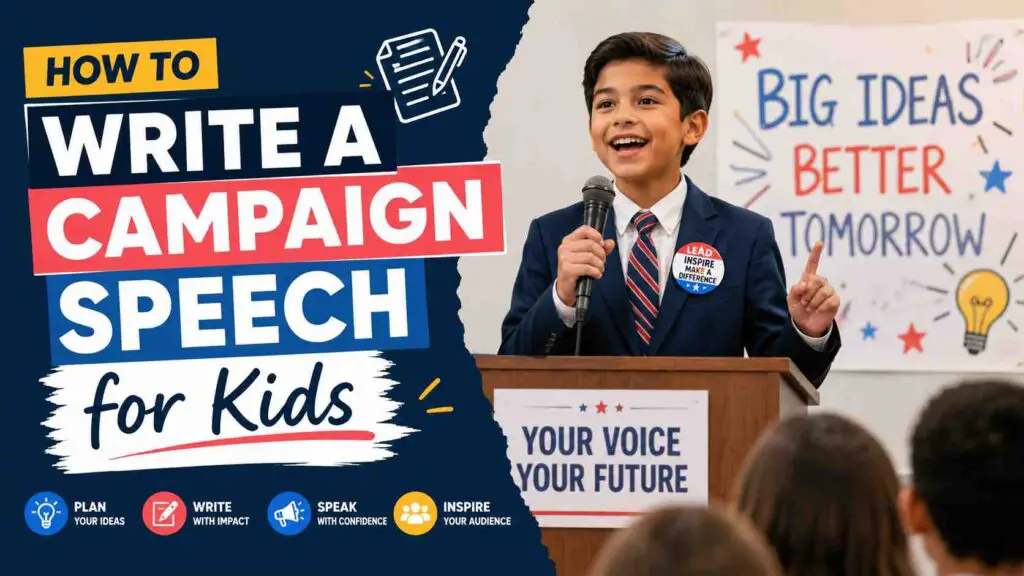
A campaign speech for kids should be simple, clear, and encouraging. It should help a young speaker explain who they are, why they are running, and how they want to help their classmates. Most importantly, it should sound natural. A child should not sound like a politician. They should sound like themselves.
A strong campaign speech gives students confidence. It also helps classmates understand why they should vote for that person. Whether the speech is for class president, student council, school captain, or another leadership role, the goal is the same. The speaker must connect with the audience, share a positive message, and ask for support in a respectful way.
What to Include in a Campaign Speech for Kids
A Friendly Greeting
Every campaign speech should begin with a warm greeting. This helps the speaker sound polite and confident from the start.
A simple greeting works best. For example, the child might say:
“Good morning, everyone.”
Or:
“Hello, classmates and teachers.”
The greeting does not need to be long. However, it should make the audience feel included.
A Short Introduction
Next, the speaker should introduce themselves. Even if most students already know them, a short introduction still helps the speech feel complete.
The child can say their name, grade, class, and the position they are running for. For example:
“My name is Ava, and I am running for class representative.”
This part should be brief. The goal is to help everyone understand who is speaking and why.
The Reason for Running
A good campaign speech should explain why the child wants the role. This reason should feel honest and age-appropriate.
For example, the speaker might say they want to help classmates, improve school activities, share student ideas, or make the classroom more fun and organized.
This part matters because voters want to know the speaker’s motivation. A clear reason builds trust.
Positive Qualities
The speech should include a few qualities that make the child a good choice. These qualities might include kindness, responsibility, honesty, creativity, teamwork, or good listening skills.
However, the child should avoid bragging. Instead, they can connect their qualities to service.
For example:
“I am a good listener, so I will pay attention to your ideas.”
This sounds better than simply saying:
“I am the best person for the job.”
Simple Campaign Promises
A campaign speech for kids should include realistic promises. These promises should be simple enough for a student to understand and actually try to do.
Good examples include:
“I will listen to your suggestions.”
“I will share your ideas with the teacher.”
“I will help make our class activities more fun.”
The child should not promise things they cannot control. For example, they should avoid saying they will remove homework, change school rules, or add longer recess unless those things are truly possible.
A Message About Teamwork
A strong speech should remind classmates that leadership is not about being better than everyone else. It is about working together.
The speaker can say something like:
“I want our class to work as a team.”
This creates a positive tone. It also shows maturity and respect.
A Clear Request for Votes
At the end of the speech, the child should politely ask for votes. This part should be direct but not pushy.
For example:
“I hope I can count on your vote.”
Or:
“Please vote for me as your class representative.”
The ending should leave the audience with a clear message.
How to Write a Campaign Speech for Kids
#1. Understand the Position
Before writing the speech, the child should understand the role they are running for. Different positions have different responsibilities.
For example, a class president may help lead class discussions. A student council member may share ideas at meetings. A school captain may represent the school at events.
Once the child understands the position, they can write a speech that matches it. This makes the speech more focused and believable.
Ask these questions first:
What does this role involve?
How can this role help classmates?
What kind of leader should this person be?
After answering these questions, the child will have a clearer idea of what to say.
#2. Choose One Main Message
Every strong campaign speech needs one main message. This message tells voters what the speech is really about.
For example, the main message could be:
“I will listen to everyone.”
“I will help make our class more fun.”
“I will be a responsible leader.”
“I will speak up for student ideas.”
A speech with one clear message is easier to remember. It also sounds stronger than a speech that tries to say too many things at once.
Once the child chooses the message, they should repeat that idea in different ways throughout the speech.
#3. Start With a Friendly Opening
The opening should catch attention without sounding too dramatic. Kids do not need a complicated introduction. They just need to sound friendly and confident.
A good opening can include a greeting and a short sentence about why the speaker is excited.
For example:
“Good morning, everyone. My name is Leo, and I am excited to run for class president.”
This opening is simple. It tells the audience who is speaking and what the speech is about.
The child can also begin with a question:
“Have you ever had a great idea for our class but did not know how to share it?”
This kind of opening can make classmates listen more closely.
#4. Introduce Yourself Clearly
After the opening, the child should introduce themselves in a simple way.
They can include their name, grade, and the position they want. They can also add one short personal detail if it helps the speech feel warm.
For example:
“My name is Mia. I am in Grade 4, and I am running for student council. I enjoy helping others and working with my classmates.”
This introduction gives enough information without becoming too long.
#5. Explain Why You Are Running
Now the child should explain why they want the position. This is one of the most important parts of the speech.
The reason should sound sincere. It should not only be about winning. It should be about helping others.
For example:
“I am running because I want every student in our class to feel heard. I know that everyone has ideas, and I want to help share those ideas.”
This kind of reason shows purpose. It tells classmates that the speaker cares about them.
#6. Share Your Best Qualities
Next, the child should mention a few qualities that would make them a good leader. Two or three qualities are enough.
Good qualities for a campaign speech include:
kindness
honesty
responsibility
confidence
creativity
patience
good listening
teamwork
The child should explain each quality with a real example.
For example:
“I am responsible because I finish my work on time and try my best to help when someone needs support.”
This sounds stronger than simply saying:
“I am responsible.”
Examples make the speech more believable.
#7. Add Realistic Ideas
A campaign speech becomes more powerful when it includes ideas. These ideas show what the child hopes to do if elected.
The ideas should be practical. They should also match the child’s age and the school rules.
For example:
“I would like to create a suggestion box so classmates can share ideas.”
“I want to help plan fun reading challenges.”
“I will remind everyone about important class events.”
“I will work with our teacher to make group activities more enjoyable.”
These ideas give voters a reason to support the speaker.
#8. Keep the Language Simple
A campaign speech for kids should sound like a child wrote it. Adults can help, but the speech should still feel natural.
Use short sentences. Choose simple words. Avoid big political phrases that sound fake or confusing.
For example, instead of saying:
“I will advocate for the collective interests of the student body.”
Say:
“I will listen to your ideas and share them.”
Simple language is usually stronger. It is also easier to remember when speaking in front of classmates.
#9. Make the Speech Positive
A child should never use a campaign speech to insult other candidates. The speech should focus on their own strengths, ideas, and goals.
A positive speech sounds more mature. It also helps the speaker earn respect.
Instead of saying:
“The other candidates will not listen.”
Say:
“I promise to listen carefully to everyone.”
This keeps the message kind and confident.
#10. End With a Strong Closing
The closing should remind classmates of the main message. It should also include a polite request for votes.
A strong closing might sound like this:
“If you want a class representative who listens, helps, and works hard, I hope you will vote for me. Thank you.”
This ending is clear and respectful. It tells voters exactly what to remember.
#11. Practice the Speech Out Loud
After writing the speech, the child should practice reading it aloud. This helps them find words that sound awkward or difficult.
They should practice standing straight, speaking clearly, and looking at the audience. They should not rush. They should pause between important ideas.
Practicing also helps reduce nervousness. The more familiar the speech feels, the more confident the child will sound.
#12. Make Final Edits
Before giving the speech, the child should make final edits. They should remove any sentence that sounds too long, confusing, or unnatural.
They should also check that the speech includes:
a greeting
an introduction
a reason for running
positive qualities
realistic ideas
a clear ending
a request for votes
Once all these parts are included, the speech is ready.
Closing Thoughts
Writing a campaign speech for kids does not have to be difficult. The best speeches are simple, honest, and positive. They help the child explain who they are, what they care about, and how they want to serve their classmates.
A great campaign speech should not sound perfect. It should sound real. When a child speaks with confidence, kindness, and clear ideas, classmates are more likely to listen.
In the end, a campaign speech is not only about winning votes. It is also a chance for a child to practice leadership, communication, and courage.