
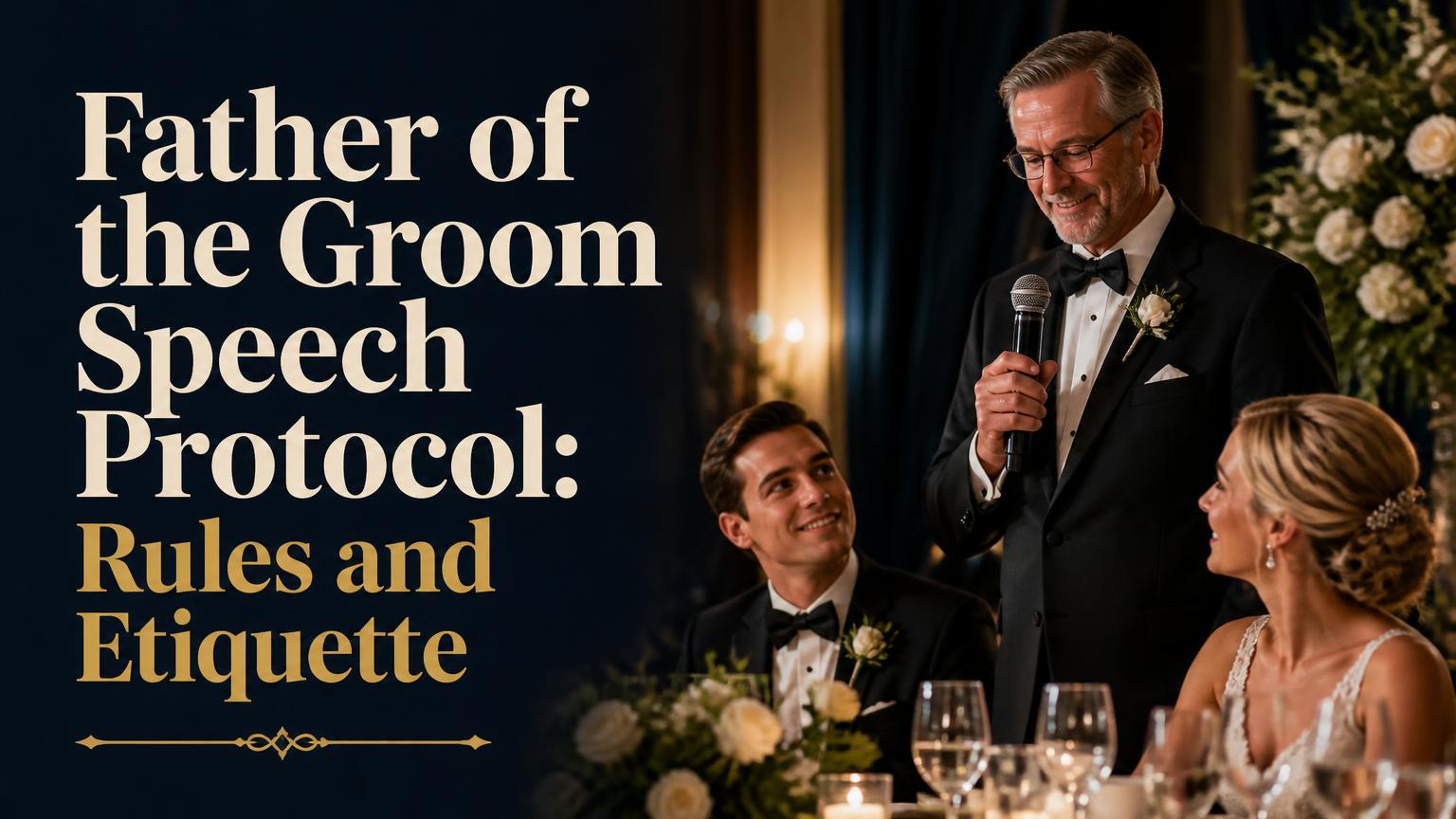
The father of the groom is often invited to welcome guests, thank both families, share a meaningful perspective on his son, and raise a toast to the newly married couple. However, there is no universal rule requiring him to speak or follow one fixed script. The couple may prefer a brief welcome, a formal speech, or no parental speeches at all. The best protocol is to confirm expectations in advance, respect the wedding’s tone, and keep the focus on both partners rather than treating the reception as a personal biography of the groom.
Father of the Groom Speech Protocol: Key Rules and Etiquette
Clarify Your Role With the Couple
Before writing anything, ask the couple what they would like your speech to accomplish. At some weddings, the father of the groom acts as a host and welcomes everyone. At others, he gives a personal tribute, introduces a toast, or simply offers a few words of thanks. Find out whether there will be other parental speeches, who will speak first, and whether a particular time limit has been set.
This conversation also gives the couple an opportunity to identify subjects they would rather you avoid. Their preferences matter more than traditional expectations, especially when families, cultures, religions, or wedding formats differ.
Keep the Speech Brief and Focused
A father of the groom speech usually works well at around three to five minutes, unless the couple or venue has requested something different. That is long enough to say something personal and memorable without delaying dinner, dancing, or other planned events. If several people are speaking, a shorter contribution may be more considerate.
A useful test is whether each paragraph helps welcome the guests, honor the couple, reveal something meaningful about the groom, or express gratitude. If a story is entertaining but does not serve one of those purposes, remove it or reduce it to one sentence.
Welcome Guests and Acknowledge Both Families
A gracious opening normally recognizes the guests and expresses pleasure at seeing everyone gathered. You may thank people for traveling, acknowledge the hosts, and welcome the bride’s or partner’s family. This does not have to sound like a formal roll call. Mention only the people or groups whose acknowledgment is appropriate for this particular wedding.
Be careful with the word “hosts.” In some families, one set of parents may be hosting financially; in others, the couple is hosting the entire celebration themselves. If you are unsure, use inclusive language such as, “Thank you all for being here and helping make this day so special.”
Speak About the Couple, Not Only Your Son
Your relationship with the groom gives you a natural subject, but the speech should ultimately celebrate the marriage. Share a quality, memory, or lesson that helps guests understand him, then connect it to the person he has chosen and the life they are building together.
Use the partner’s name and speak directly about what you appreciate in their relationship. A speech devoted entirely to childhood stories can unintentionally make the partner feel like an outsider. Even when the groom is your main connection to the wedding, the couple is the true focus.
Choose Stories That Are Personal but Appropriate
The strongest stories are specific, brief, and revealing. A moment from the groom’s childhood, an example of his loyalty, or an observation about how he has matured can give the speech warmth and personality. Choose a story that most guests can understand without a long explanation.
Avoid private family information, embarrassing mistakes, romantic history, financial matters, health details, or stories that place the groom or partner in an uncomfortable position. If you would hesitate to tell the story in front of the couple, their close relatives, and older guests, it probably does not belong in the speech.
Use Humor Without Making Anyone the Target
Gentle humor can make a father of the groom speech feel natural, especially when it arises from an affectionate and recognizable family moment. The safest humor is directed at your own habits, the ordinary adjustments of family life, or a harmless detail that the groom has already agreed is suitable for public discussion.
Do not make jokes about the partner, the partner’s family, former relationships, drinking, appearance, intimacy, or the cost of the wedding. Avoid humor that depends on the audience misunderstanding something or that leaves the couple wondering what you might say next. A warm smile and a well-timed light observation are often more effective than a series of jokes.
End With Gratitude and a Clear Toast
A speech should not simply stop after the final story. Bring it toward the couple by expressing your hopes for their marriage, thanking them for including you, or recognizing the love and support surrounding them. Keep the ending sincere rather than making broad promises about what their future must look like.
If the reception includes a toast, invite guests to raise their glasses and say the couple’s names clearly. A simple ending is often best: “Please join me in raising a glass to [Name] and [Name]—to a life filled with patience, laughter, and lasting companionship.” Confirm beforehand whether alcohol-free or religiously specific wording is more suitable.
Prepare for Emotion and Practical Delivery
Bring a printed copy or discreet cue cards with large, readable text. Mark the names, transitions, and final toast so you can find them quickly if you lose your place. Rehearse aloud rather than editing silently; words that look elegant on a page may sound stiff or too long when spoken.
At the reception, hold the microphone close enough to be heard without speaking into it. Look up regularly, pause after an emotional sentence, and take a breath before continuing. If you become overwhelmed, it is acceptable to pause, acknowledge that the moment matters, and continue slowly. You are not required to deliver the speech perfectly.
How to Structure a Father of the Groom Speech
Step 1. Identify the Main Purpose of the Speech
Decide what you most want guests to remember. Your purpose might be to welcome the partner into the family, honor the couple’s relationship, thank everyone for attending, or share a brief reflection on the groom’s character. Choosing one central purpose prevents the speech from becoming a collection of unrelated memories.
Write that purpose in one sentence before drafting. For example: “I want to show how [Groom’s Name]’s thoughtfulness has shaped his relationship with [Partner’s Name].” Every story or observation should support that idea or contribute directly to the celebration.
Step 2. Write a Natural Opening
Begin with a greeting suited to the event. Identify yourself if some guests may not know you, then welcome everyone and state why you are grateful to be present. You might say that it is a privilege to see your son marry someone he loves, or that the gathering reflects the support surrounding the couple.
Avoid beginning with an apology, a complaint about public speaking, or a long explanation of how difficult the speech was to write. A modest acknowledgment of nerves can be human, but the opening should quickly turn toward the couple and the occasion.
Step 3. Select One or Two Meaningful Memories
Choose memories that reveal a quality rather than merely proving that something happened. A story about the groom helping someone, persevering through difficulty, welcoming a new person, or learning from experience gives the audience a reason to care.
Keep each story compact: establish the setting, describe the important moment, and explain what it showed you. Do not include every detail. The audience does not need a complete family history; it needs one clear glimpse of the person you are honoring.
Step 4. Connect the Groom’s Qualities to the Marriage
After discussing your son, turn deliberately toward the couple. Explain how you have seen the partner bring out his happiness, steadiness, generosity, or confidence. You may also describe what you admire about them together without pretending to know every part of their relationship.
A transition can be simple: “That is one reason I was so pleased to see him meet [Partner’s Name].” Then name something you value in their partnership. This shift ensures that the speech feels like a wedding speech rather than a father’s tribute delivered at a different kind of gathering.
Step 5. Add Thanks Without Turning the Speech Into a List
Gratitude belongs in the speech, but a long list of names can lose the audience. Thank the couple for bringing everyone together, recognize those who helped create the celebration, and acknowledge the families or friends whose support has mattered. Mention specific contributions only when they are especially relevant.
If you need to thank many people, coordinate with the couple or event host so your remarks do not duplicate another speech. A few genuine sentences usually have more impact than a rapid catalogue of relatives, vendors, and responsibilities.
Step 6. Write a Forward-Looking Ending
The final lines should leave the audience with a clear feeling of goodwill. Express a hope for the couple’s shared life, but avoid predicting that their marriage will always be easy or that love alone will solve every challenge. A grounded wish for patience, friendship, curiosity, and continued care sounds more personal than a string of wedding clichés.
Finish with the toast if one is expected. Write the final sentence in your notes exactly as you intend to say it. Knowing the closing words can make the entire speech feel more confident, particularly if emotion makes improvising difficult.
Step 7. Edit for Speaking Time and Sound
Read the draft aloud with a timer. Most speakers deliver approximately 120 to 140 words per minute, but pauses, laughter, and emotion can slow a wedding speech. If your draft runs longer than the agreed limit, cut repeated ideas before cutting the most meaningful story.
Replace formal written phrases with language you would actually use with the guests. Shorten long sentences, add paragraph breaks where you need to breathe, and underline names or words that deserve emphasis. The finished speech should sound like a thoughtful version of you, not like a ceremonial document.
Protocol Questions That Depend on the Wedding
Wedding speech customs vary considerably. Some receptions follow a traditional order in which parents speak before the best man, maid of honor, or other attendants. Some couples prefer speeches between courses, while others schedule them after dinner or limit them to a few brief toasts. The venue, coordinator, master of ceremonies, or couple can tell you when to stand, where to go, and whether you should use a microphone. Follow the event’s actual plan rather than assuming a familiar tradition applies.
Family circumstances may also require sensitivity. If parents are divorced, remarried, estranged, or sharing responsibilities, do not make assumptions about who should be acknowledged first or what title each person prefers. A blended family may call for inclusive language, while a small ceremony may make a formal host-style speech feel unnatural. Religious and cultural expectations can affect blessings, toasts, forms of address, and whether alcohol is appropriate. When in doubt, ask the couple privately and respect their answer.
A father of the groom is not automatically expected to pay for the reception, give a lengthy speech, or represent every member of the family. Nor must he speak at all if the couple has not invited him to do so. If public speaking would be especially difficult, he can offer a written message, make a shorter toast, or ask the couple whether another arrangement would be helpful. Protocol should support the celebration, not create unnecessary pressure.
Common Problems to Avoid in the Final Draft
One common problem is beginning with a long account of the groom’s entire childhood. Select one or two moments instead of moving year by year. Another is praising the groom in ways that imply the partner is secondary, such as describing the marriage as the moment when the partner “finally” completed him. Celebrate the relationship as a partnership between two whole people.
Also remove anything that sounds like a warning, demand, or private negotiation. Advice about grandchildren, household roles, money, or family loyalty rarely belongs in a public wedding speech. Do not use the microphone to settle an old disagreement or reveal information the couple has chosen not to share. Read the speech to a trusted listener who can tell you where the tone becomes too long, too personal, or less generous than you intended.
Closing Thoughts
Good father of the groom speech protocol is less about following a rigid tradition than about showing consideration. Confirm the couple’s wishes, respect the event’s schedule, welcome both families, share an authentic but appropriate memory, and return the focus to the marriage. A brief, well-rehearsed speech with a sincere toast will usually be more memorable than a longer performance. Let your relationship with your son give the speech its warmth, and let your respect for the couple guide every word.