
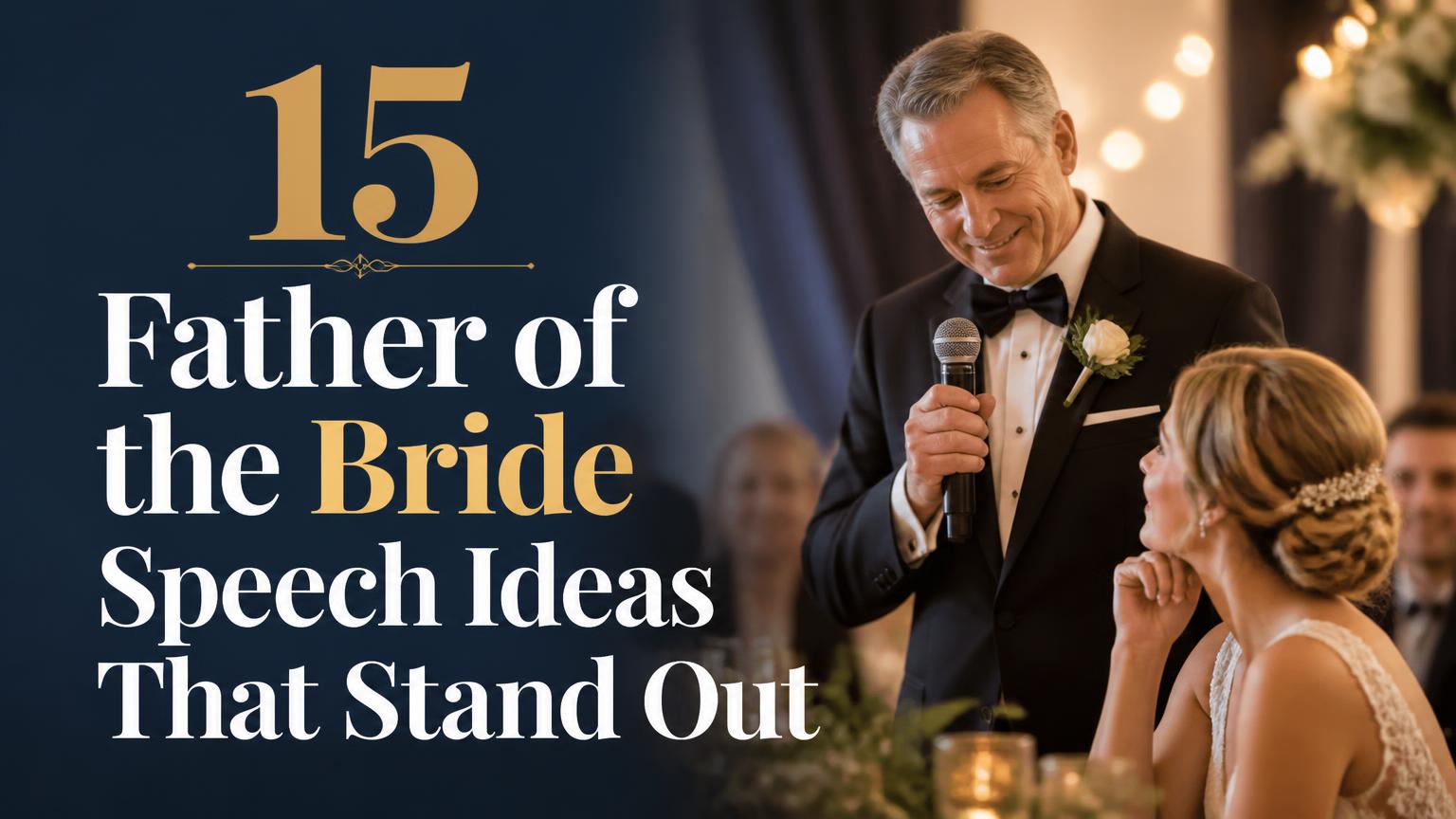
A father of the bride speech can be heartfelt without sounding predictable, and memorable without turning into a performance. The strongest speeches usually combine one clear message with a few specific details: a childhood memory, an observation about the couple, a word of gratitude, or a hope for the future. The ideas below are designed for different personalities and family situations, so you can choose an approach that feels natural, respectful, and appropriate for the wedding audience.
Father of the Bride Speech Ideas That Stand Out Naturally
1. Begin With a Welcome That Includes Everyone
Open by welcoming the guests and expressing genuine gratitude for their presence. Mention both families, close friends, and anyone who has traveled a long way if that feels appropriate. This creates a gracious tone immediately and reminds the room that the wedding is a shared celebration, not only a story about the bride and her father. Keep the welcome brief so it leads naturally into your personal remarks.
2. Tell One Vivid Childhood Story
Choose one short story that reveals something about your daughter rather than listing several unrelated memories. Perhaps she defended a younger sibling, organized an imaginary event, cared deeply about an animal, or showed unusual determination over a small challenge. The story does not need to be dramatic. A specific scene with a clear point will help guests picture her personality and understand the qualities you still admire.
3. Show How She Has Grown
A moving speech can connect the child you remember with the adult standing before you. Describe a small moment that showed her becoming more independent, compassionate, brave, or thoughtful. Avoid suggesting that marriage means you are “losing” her or that she now belongs to someone else. Instead, show your pride in the person she has become and your respect for the life she is building.
4. Build the Speech Around a Defining Quality
Select one quality that captures your daughter particularly well, such as loyalty, curiosity, generosity, resilience, or humor. Then support it with two or three brief examples from different stages of her life. This gives the speech a strong central thread and prevents it from becoming a collection of compliments. A defining quality is most effective when you show it through actions instead of simply naming it.
5. Describe the First Time You Saw Their Connection
Share an appropriate observation from the early days of the relationship. You might remember how your daughter spoke about her partner, how comfortable they seemed together, or how naturally they supported each other. You do not need to claim that you instantly knew they would marry. An honest account of what you noticed can feel more genuine than an exaggerated prediction.
6. Explain What You Appreciate About Her Partner
Use this opportunity to welcome the bride’s partner warmly and specifically. Mention a quality you have observed, such as patience, steadiness, kindness, attentiveness, or the ability to make your daughter feel understood. Keep the focus on sincere appreciation rather than evaluating or “approving” the partner. The goal is to honor the relationship and make the couple feel supported by both families.
7. Show Why the Couple Works Well Together
Rather than saying only that they are perfect for each other, explain how they complement one another. Perhaps one is calm when the other is worried, one encourages adventure, or both share a strong commitment to family and friendship. Choose observations you can honestly support. This idea helps the speech celebrate the partnership itself instead of placing all attention on the bride.
8. Use a Meaningful Object or Family Tradition
A photograph, recipe, book, piece of advice, family ritual, or familiar object can give the speech a memorable focus. Explain what it represents and connect it to the couple’s future. If you refer to a family tradition, make sure it feels welcoming rather than like an obligation the newly married couple must continue. The object should illuminate a value or memory, not become a prop that distracts from your words.
9. Include Gentle Humor That Reveals Affection
A little humor can make a father of the bride speech feel relaxed, but the safest jokes are affectionate and specific. Tell a story about your own nervousness, an everyday family mishap, or a harmless habit that your daughter and partner recognize. Avoid embarrassing disclosures, jokes about money or divorce, criticism of the partner, and stories that require the audience to feel uncomfortable before they laugh.
10. Thank the People Who Helped Shape the Day
A wedding depends on more people than the couple and their parents. You can briefly recognize relatives, friends, attendants, planners, or anyone whose practical or emotional support made the celebration possible. Keep the acknowledgments focused; a long roll call can lose the room. One thoughtful sentence about the community surrounding the couple often feels warmer than naming every contribution individually.
11. Talk About the Relationship Without Making It Possessive
A father may want to express how much his daughter means to him, but phrases about giving her away or no longer being important can unintentionally sound painful or outdated. Focus instead on the continuing nature of your relationship. You can say that your role has changed as she has grown, while your love, respect, and availability remain constant. This creates a generous and emotionally mature message.
12. Offer Advice as a Gift, Not a Set of Rules
If you want to share marriage advice, keep it concise and frame it as something you have learned or hope for the couple. Ideas such as listening carefully, repairing disagreements, making time for laughter, or noticing ordinary acts of kindness are more useful than rigid instructions. Speak to both partners equally, and avoid presenting your own experience as the only model for a successful marriage.
13. Mention Loved Ones Who Cannot Be There
If someone important is absent because of death, illness, distance, or another circumstance, a brief acknowledgment may be meaningful. Mention the person only if it feels right for the couple and the wider family. Keep the wording simple and avoid making the moment heavier than intended. You can refer to the values, love, or memories that person contributed without making assumptions about religious beliefs or an afterlife.
14. Offer a Specific Hope for Their Future
Instead of ending with a broad wish for happiness, describe what you hope their life together contains. You might wish them a home where friends feel welcome, patience during difficult seasons, curiosity about one another, or the freedom to keep growing. Specific hopes sound more personal and give the closing emotional substance. They also allow you to look forward without pretending that marriage will always be easy.
15. Return to an Image From the Opening
A strong closing can echo an image, phrase, or story from the beginning of the speech. If you opened with a childhood suitcase, a family recipe, or a lesson your daughter once taught you, bring that idea back as you raise your glass. This creates a satisfying sense of completion and makes the toast feel deliberately written rather than abruptly finished.
Making Your Chosen Idea Sound Personal
The best father of the bride speech ideas become memorable only when they are connected to real details. Choose one main approach, then add a few supporting thoughts rather than trying to use every possible theme. The following steps can help you turn a promising idea into a speech that sounds like you and reflects the couple honestly.
Step 1. Choose One Central Feeling
Decide what you most want the bride, her partner, and the guests to feel when you finish. It might be welcomed, proud, amused, reassured, grateful, or moved. This decision gives you a standard for selecting material. If a story is funny but does not support your central feeling, save it for another time. A focused speech is usually more effective than one that attempts to express every emotion at once.
Step 2. Gather Specific Details
Write down moments, phrases, habits, places, and small actions that show the qualities you want to describe. Specific details are more powerful than general statements such as “she has always been wonderful.” Note what happened, who was present, and what the moment revealed. You do not need to include all your notes; they are there to help you choose authentic material rather than rely on familiar wedding phrases.
Step 3. Include the Couple as a Couple
Even when the speech centers on your daughter, make room for her partner and their shared life. Mention what you have learned about the partner, how the relationship has affected your daughter, and what you appreciate about them together. This balance prevents the speech from sounding like a long parent-child tribute with the marriage added at the end.
Step 4. Set Clear Boundaries for Humor
Read every joke from the perspective of the couple, their families, and a guest who does not know the backstory. Remove anything involving private conflict, former relationships, intimate details, humiliation, or a sensitive family subject. Test the material with someone discreet who understands the audience. If a joke is funny only because it makes someone uncomfortable, it does not belong in the speech.
Step 5. Edit for Speaking Time
Many father of the bride speeches work well at roughly three to five minutes, although the couple’s schedule and preferences should guide you. Read the speech aloud with a timer, allowing space for laughter, applause, and emotion. Cut repeated compliments and long explanations before cutting the most meaningful story. A shorter speech with room to breathe will usually be easier for guests to follow.
Step 6. Write and Practice the Final Toast
End with a clear statement addressed to the couple, followed by an invitation for guests to raise their glasses if that suits the event. Practice from notes rather than memorizing every word, and mark places where you want to pause. Use large print or discreet cue cards. If emotion interrupts you, stop, breathe, look at the couple, and continue when you are ready; there is no need to apologize repeatedly.
Closing Thoughts
A father of the bride speech stands out because it feels observant, generous, and true to the family—not because it contains the biggest joke or the most elaborate wording. Choose one idea that suits your relationship with your daughter and her partner, support it with specific memories, and leave room for the couple’s own story. A sincere welcome, a thoughtful reflection, and a well-prepared toast can create a lasting moment without overshadowing the wedding itself.