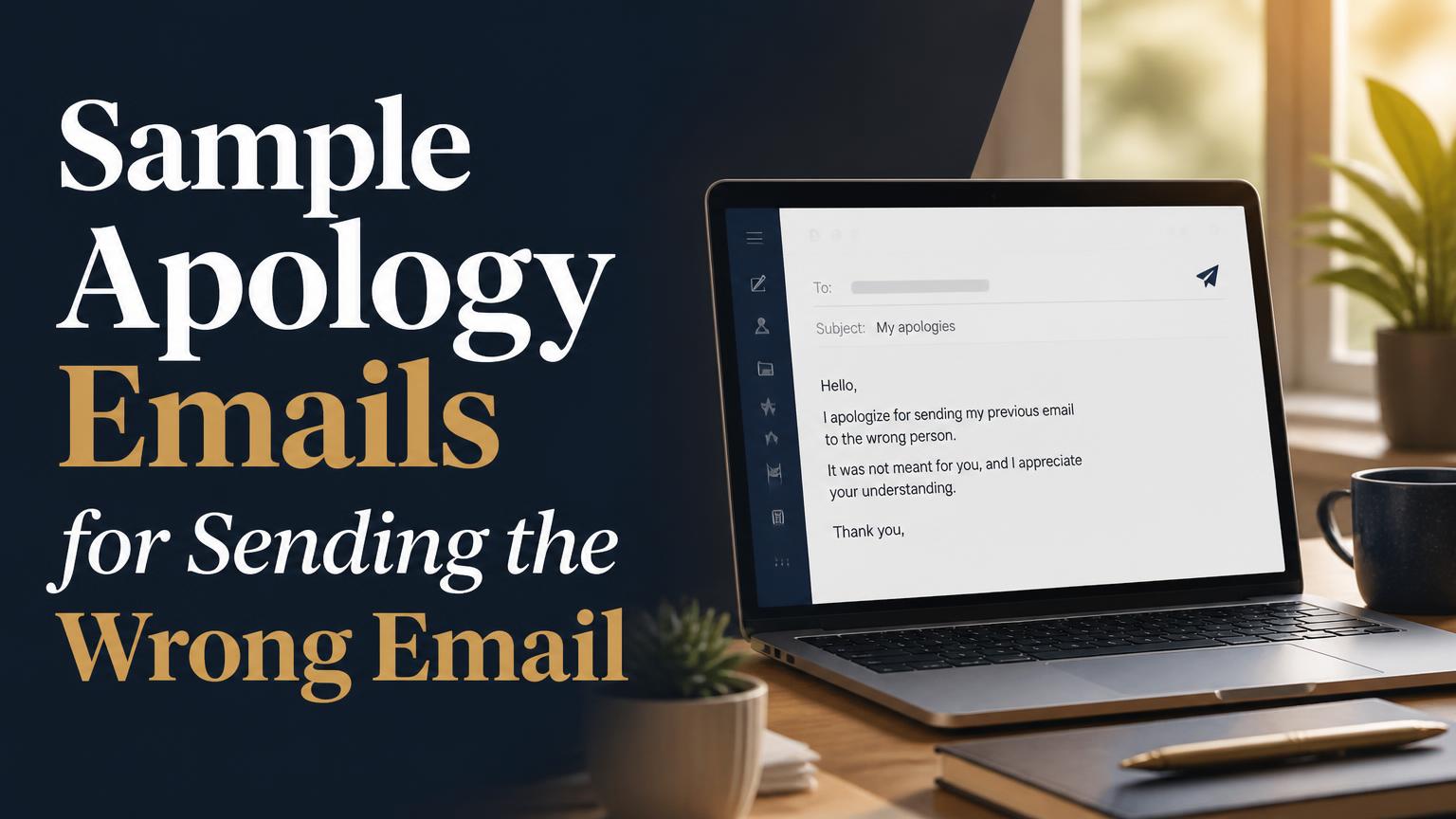
Sending the wrong email can be uncomfortable, whether it went to the wrong person, included an incorrect attachment, contained inaccurate information, or was sent before it was ready. A prompt, direct apology helps clear up confusion and shows that you take the mistake seriously. The examples below cover professional, client-facing, and workplace situations. Each one can be copied as written or adapted with the correct details, recipient’s name, and any specific action needed to resolve the error.
Apology Email for Sending the Wrong Email
#1. Apology for Sending an Email to the Wrong Recipient
Subject: Apology—Email Sent to You by Mistake
Dear [Name],
I’m sorry for accidentally sending you an email that was intended for someone else. Please disregard the message and, if possible, delete it without forwarding or replying to its contents. I regret the confusion and any inconvenience this may cause. I’m reviewing recipient details more carefully before sending future emails so I can avoid repeating the mistake. Thank you for your understanding, and please let me know if the message created any concerns.
Best,
[Your Name]
#2. Apology for Sending the Wrong Attachment
Subject: Correction—Please Disregard the Previous Attachment
Dear [Name],
Please accept my apologies for sending the wrong attachment with my previous email. I attached an outdated file instead of the current version, which may have caused confusion. I have attached the correct document here and marked it clearly for your convenience. Please use this version and disregard or delete the earlier attachment. I’m sorry for the error and for any extra time it may have taken you to identify the correct information.
Kind regards,
[Your Name]
#3. Apology for Sending Incorrect Information
Subject: Correction to My Previous Email
Dear [Name],
I apologize for sending incorrect information in my earlier email. The details I provided about [the date, order, meeting, or project] were not accurate, and I should have verified them before pressing send. To clarify, the correct information is: [insert correct details]. Please rely on this correction rather than my previous message. I understand that accurate information is important, and I’m sorry for any confusion or additional work this mistake may have caused.
Regards,
[Your Name]
#4. Apology for Sending an Incomplete Draft
Subject: Apology for Sending an Incomplete Draft
Hi [Name],
I’m sorry—you received a draft before I had finished reviewing it. Please disregard that message, including the unfinished wording and preliminary details. I’m completing the review now and will send a polished version by [time or date]. Thank you for your patience, and apologies for asking you to sort through material that was not ready to share. I’ll make sure future drafts are clearly labeled and checked before they leave my inbox.
Best,
[Your Name]
#5. Apology for Sending an Inappropriately Casual Email
Subject: Apology for the Tone of My Previous Email
Dear [Name],
I’m sorry for the tone and wording of my previous email. I mistakenly sent a casual draft intended for an internal conversation instead of the professional message meant for you. That was my error, and the message did not reflect the care I want to bring to our communication. Please disregard it. I appreciate your understanding and will follow up with the accurate, properly worded information shortly.
Kind regards,
[Your Name]
Closing Thoughts
A good apology email should be prompt, specific, and calm. Acknowledge exactly what went wrong, explain what the recipient should do with the incorrect message, and provide the corrected information when necessary. Avoid lengthy excuses or shifting responsibility. Adding the recipient’s name, the relevant subject, and a clear next step will make the apology feel more thoughtful and useful. Even a simple correction can restore confidence when it is handled honestly and professionally.